
Mortgage Rate Update
U.S. Mortgage Rates in August 2026: Buy Now or Wait?
Mortgage rates remain in the mid-to-upper 6% range. Here is what is driving them, how much a small rate change affects a Long Island payment, and how buyers can compare real loan costs.
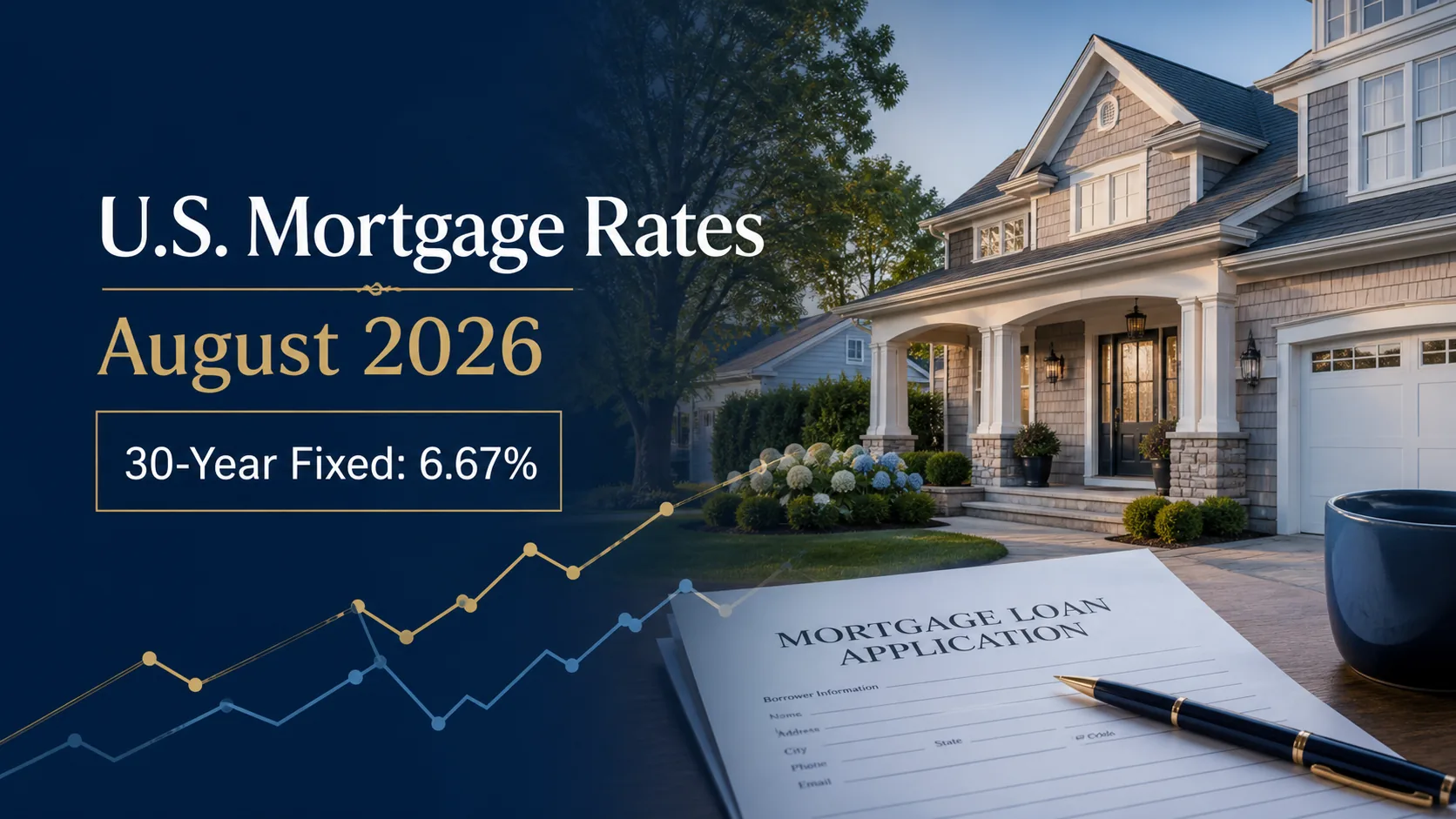
As of August 13, 2026, Freddie Mac reported an average 6.67% rate for a 30-year fixed mortgage and 5.96% for a 15-year fixed mortgage. The 30-year average rose from 6.43% on July 2 to 6.69% on August 6 before easing slightly. This is not a rapid-rate-decline environment; rates are moving within a still-elevated range.
These figures are national survey averages, not a guaranteed quote. A borrower’s credit profile, down payment, occupancy, property type, loan size, points and fees can materially change the actual offer.
Why mortgage rates do not move directly with the Federal Reserve
The federal funds rate influences short-term borrowing, but a 30-year fixed mortgage is priced through long-term bond markets and mortgage-backed securities. The 10-year Treasury yield, inflation expectations, economic growth, market volatility and the extra spread investors demand all matter.
On August 13, the 10-year Treasury yield was 4.63%; the upper end of the federal funds target range was 3.75% on August 15. Even when the Fed reduces its policy rate, long-term mortgage rates can remain elevated if markets are concerned about future inflation, fiscal borrowing or bond supply.
What 6.67% means for a $700,000 Long Island home
Assume a $700,000 purchase, 20% down, a $560,000 loan and a 30-year fixed term. Monthly principal and interest would be approximately:
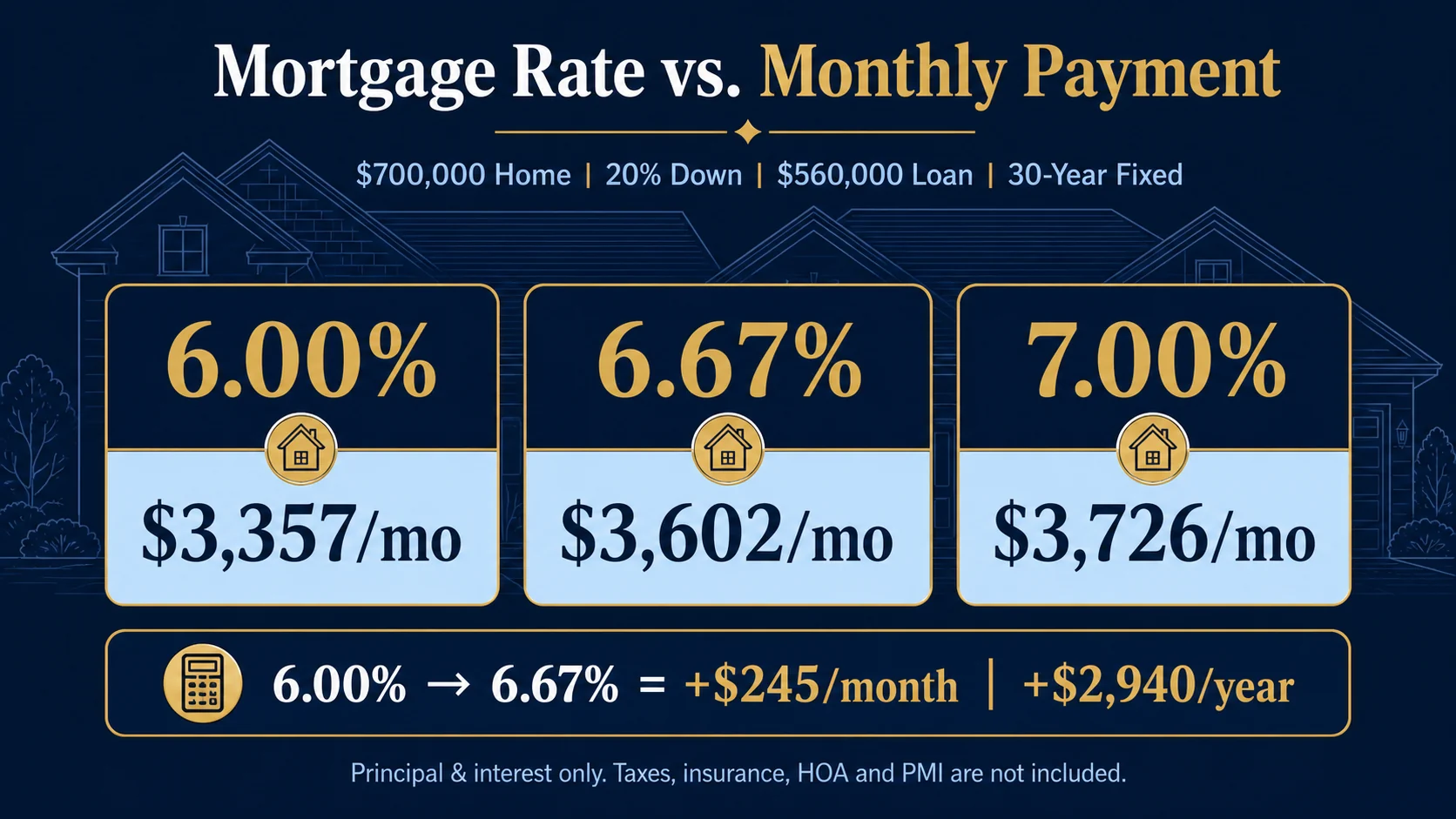
The difference between 6.00% and 6.67% is about $245 per month, or $2,940 per year. Nassau and Suffolk property taxes, homeowners insurance, HOA charges and maintenance can add substantially more, so affordability should never be judged by principal and interest alone.
Should buyers purchase now or wait?
Buying now may be reasonable when the home fits a long-term plan, income and reserves are stable, total housing costs are comfortable, and the property is fairly priced. Waiting may be prudent when a down payment would drain emergency savings, the all-in monthly cost exceeds the budget, a move is likely within a few years, or credit and debt improvements could materially improve the loan.
A future refinance can be an option, but it should not be the assumption that makes an unaffordable purchase appear affordable. Future rates, appraisal values and qualification are not guaranteed.
Compare APR, points and cash to close—not just the advertised rate
Request Loan Estimates from at least three lenders on the same day. Compare the note rate, APR, discount points, lender charges, lender credits and total cash to close. A lower rate purchased with expensive points is not automatically the better deal.
Calculate the break-even period: if points cost $5,000 and save $100 per month, recovery takes 50 months. Selling or refinancing before then could eliminate the expected benefit. Seller credits and temporary buydowns may also help, but a 2-1 buydown reduces early payments temporarily; it does not erase the permanent note rate.
Bottom line
Trying to identify the exact bottom in mortgage rates is difficult. A better decision asks whether the home’s price, property taxes, insurance, maintenance and loan terms are sustainable together. Long Island buyers should compare the full monthly housing cost and preserve adequate reserves before making an offer.
Compare your budget with actual New York housing costs
Property taxes, building charges, commuting needs and home condition can change the practical budget even when the purchase price is the same. Jae Seok Park can help narrow the search before you spend time touring unsuitable homes.
Frequently asked questions
What is the current average 30-year mortgage rate?
Freddie Mac reported 6.67% for the week ending August 13, 2026. Individual quotes vary.
Will a Fed rate cut immediately lower mortgage rates?
Not necessarily. Long-term Treasury yields, inflation expectations and mortgage-bond pricing can offset a policy-rate cut.
Is 20% down required?
No. Program requirements vary, though a smaller down payment may affect mortgage insurance, pricing and monthly costs.
This article is general information, not mortgage, tax or legal advice. Confirm rates and eligibility with a licensed lender.