
Home Equity Guide
HELOC vs. Home Equity Loan: Rates, Payments and Risks Compared
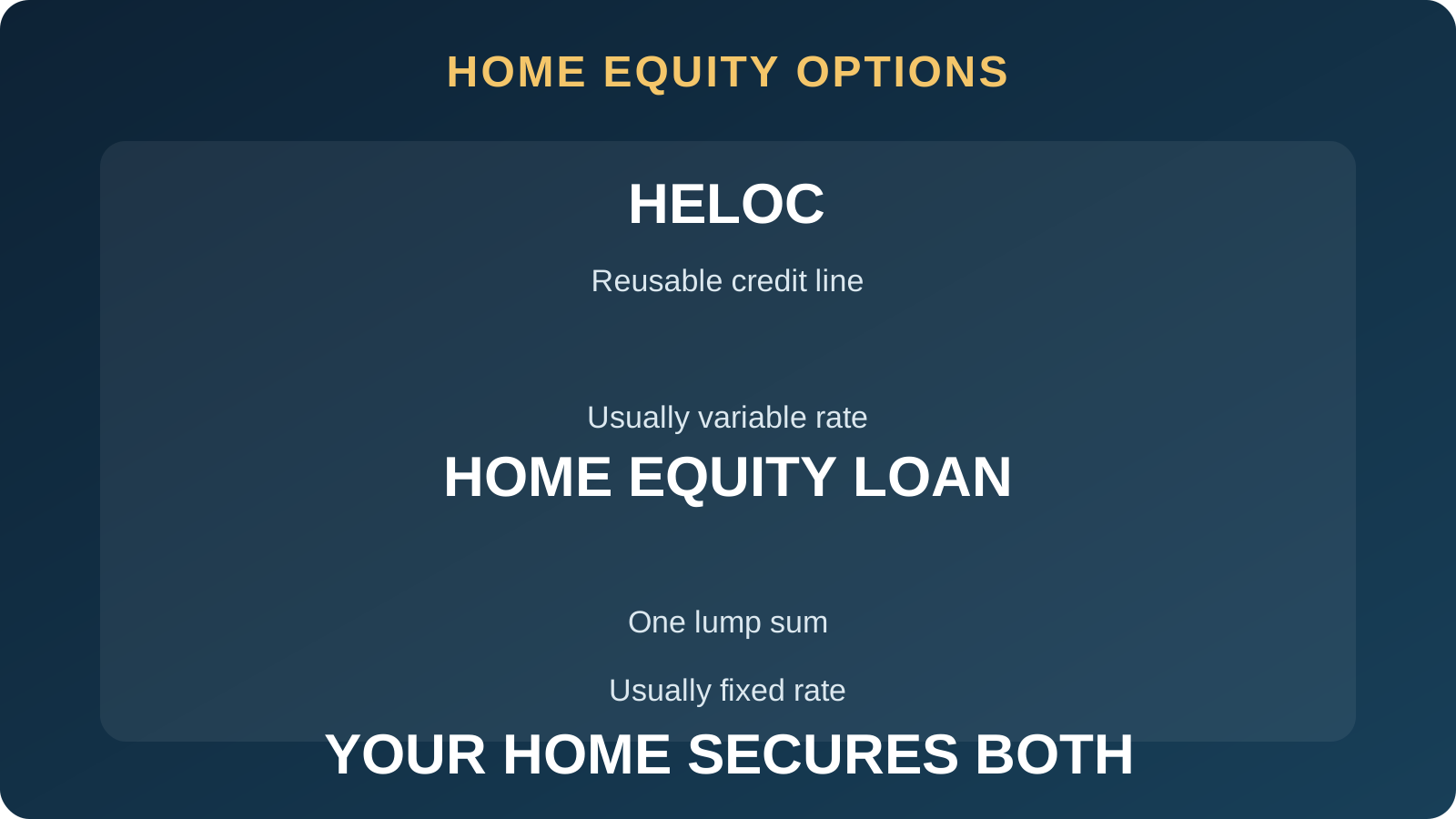
Both products borrow against home equity, but a HELOC is usually a reusable line with a variable rate while a home equity loan normally delivers one lump sum with a fixed rate. The right choice depends on how and when the money will be used—and how much payment uncertainty the household can safely carry.

The basic difference
A home equity loan generally provides a lump sum and is repaid in scheduled installments, commonly at a fixed interest rate. A home equity line of credit, or HELOC, allows borrowing up to a limit during a draw period, repaying and borrowing again subject to the agreement. HELOC rates are often variable, so payments can change.
When a HELOC may fit
A HELOC may fit projects with uncertain timing or staged costs, such as renovations completed over several months. Interest is generally charged only on the amount drawn, not the entire approved line. But easy access can encourage overspending, and a lender may freeze or reduce a line under circumstances allowed by the agreement.
When a home equity loan may fit
A home equity loan may be easier to budget when the cost and timing are known: one project, one amount and a predictable payment. The tradeoff is paying interest on the full lump sum from the beginning, even if part of the money sits unused.
Compare more than the advertised rate
Review APR, rate index and margin, introductory pricing, closing costs, annual or inactivity fees, minimum draws, early-closure charges, appraisal requirements and repayment terms. For a HELOC, model a higher-rate scenario and the payment after the draw period ends. For either product, confirm whether a balloon payment is possible.
Your home is the collateral
Both products place the home at risk. If payments are not made, foreclosure may be possible. Borrowing to consolidate unsecured debt can turn debt that did not threaten the home into debt secured by it. A lower initial payment is not enough reason to proceed without a full household cash-flow test.
Tax deduction is not automatic
Interest deductibility depends on how funds are used and current tax rules; it is not guaranteed merely because the loan is secured by a home. Keep records and ask a qualified tax professional about the specific use of proceeds.
Decision checklist
Choose the amount actually needed, preserve emergency reserves, compare at least three written offers, stress-test higher payments, and avoid using short-term home equity debt to cover an ongoing budget deficit. Ask what happens if the home value falls or the property must be sold earlier than planned.
Bottom line
A HELOC offers flexibility; a home equity loan offers payment predictability. Neither creates free money—the debt is tied to the home. The safest choice is the smallest structure that solves a defined need without weakening the owner’s long-term housing security.
Frequently asked questions
Is a HELOC the same as a second mortgage?
A HELOC is commonly secured by a junior lien, but it operates as a revolving line rather than a one-time installment loan.
Are HELOC rates fixed?
Many are variable, though some lenders may offer fixed-rate conversion features. Read the agreement.
Can the lender foreclose?
Because the home secures the debt, failure to repay can put the home at risk.
This article is general educational information, not tax, legal, lending or investment advice. Rules and eligibility depend on facts and can change; consult qualified professionals.