
Real Estate Tax Strategy
1031 Exchange Rules: The 45-Day and 180-Day Deadlines Explained
A Section 1031 exchange can defer recognition of gain when qualifying U.S. investment or business real estate is exchanged for other like-kind real estate. It is not a tax-free sale, and the deadlines and transaction structure are unforgiving.

What a 1031 exchange actually does
Section 1031 generally allows an investor to defer recognizing gain when real property held for investment or business use is exchanged for other like-kind real property. “Like-kind” is broad for U.S. real estate: an apartment building may be exchanged for land, a rental house or another commercial property. A primary residence, property held mainly for resale, stocks and partnership interests generally do not qualify. U.S. real property is not like-kind to property outside the United States.
The two deadlines investors cannot miss
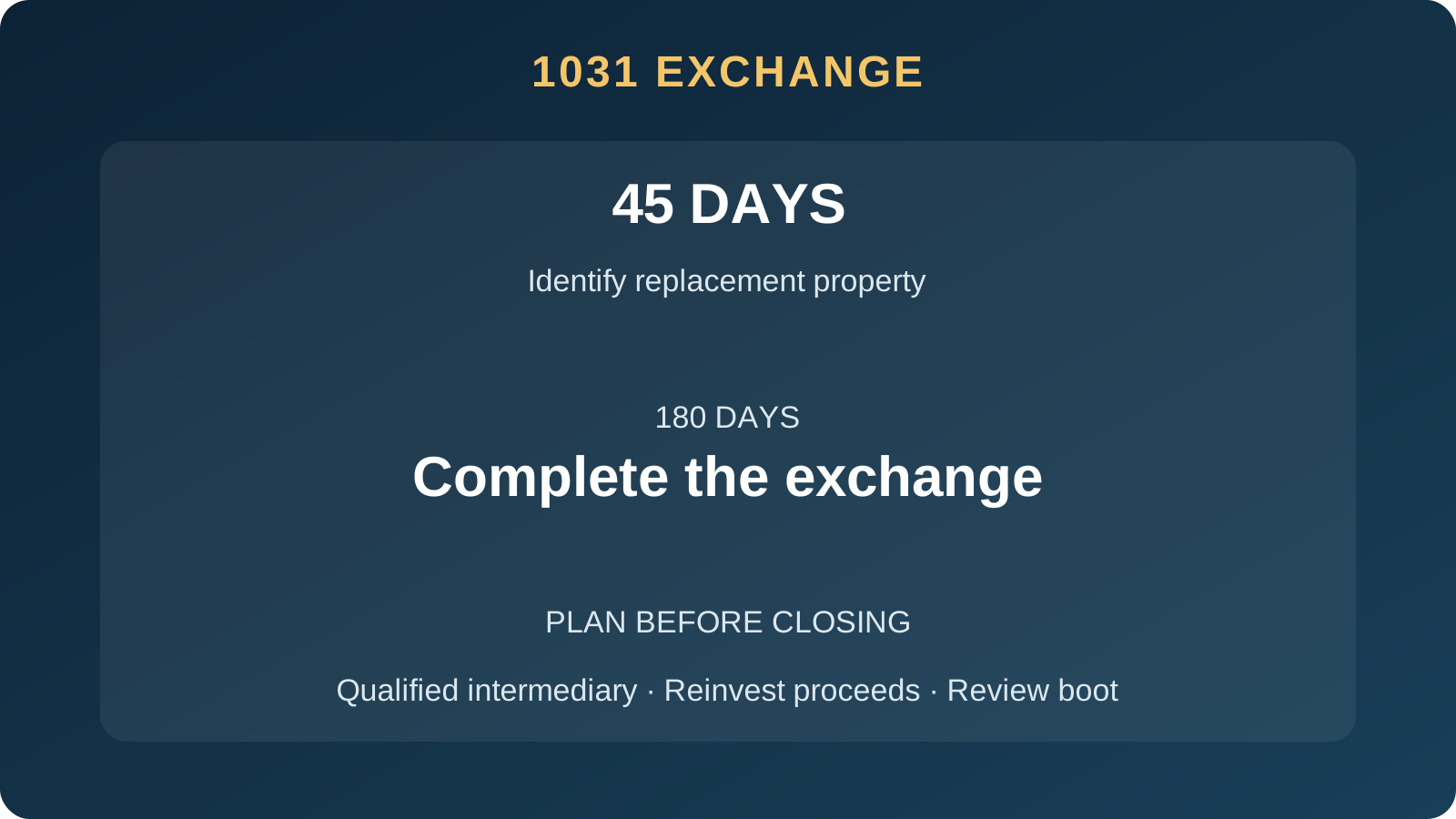
In a typical delayed exchange, the investor must identify potential replacement property in writing within 45 calendar days after transferring the relinquished property. The replacement property generally must be received within 180 calendar days after that transfer, or by the due date of the tax return for that year including extensions, whichever is earlier. These periods run concurrently; the 180-day clock does not begin after day 45.
Why a qualified intermediary matters
The seller generally cannot take control of the sale proceeds and later decide to exchange. A qualified intermediary is normally engaged before closing to hold the proceeds and acquire and transfer the replacement property under the exchange agreement. The intermediary, attorney, tax adviser and closing team should coordinate before the first sale closes.
Identification rules in plain English
Many investors use the three-property rule and identify up to three potential replacements regardless of value. Other identification methods may be available, including the 200% rule, but they are technical. The identification must be unambiguous and delivered to an appropriate party—not kept privately in a notebook or email draft.
Debt, cash and “boot”
To achieve full deferral, investors often aim to reinvest all net proceeds and replace the value and debt relinquished, but the exact tax result depends on basis, liabilities, expenses and any non-like-kind value received. Cash retained, debt relief not offset, or other property received may create taxable “boot.” A larger purchase alone does not automatically guarantee full deferral.
A practical pre-sale checklist
Before listing, estimate adjusted basis, depreciation, selling costs and potential gain; interview qualified intermediaries; confirm the property’s investment or business use; map the 45-day identification window; arrange financing early; and discuss state tax treatment. File Form 8824 with the federal return for the year of the exchange.
Bottom line
A 1031 exchange is a timing and documentation strategy, not a last-minute form. Investors should build the exchange team before accepting an offer and should never rely on a replacement-property search that starts after closing.
Frequently asked questions
Can I exchange a rental house for an apartment building?
Generally, U.S. real properties held for investment or business use can be like-kind even when their grade or type differs.
Can I receive the sale proceeds myself?
Direct or constructive receipt can disqualify the exchange; delayed exchanges commonly use a qualified intermediary engaged before closing.
Does a 1031 exchange erase tax forever?
It generally defers gain. Tax may be recognized in a later taxable sale unless another provision applies.
This article is general educational information, not tax, legal, lending or investment advice. Rules and eligibility depend on facts and can change; consult qualified professionals.